Gounod's "Faust" - The Background
Taking a break from preparing the reduced orchestration for Faust I’ve been giving some thought to the background to the opera.
Charles Gounod had ambitions to compose an opera based on the Faust legend as early as the 1840s but it took a meeting with the well-established opera librettists Jules Barbier and Michel Carré in 1855 to crystallise the idea.

Carré had already written a three-act play based on Goethe’s Faust, called Faust et Marguerite and it was this work that provided the basis for Gounod’s opera.
The opera was commissioned by Léon Carvalho the manager of the Théâtre-Lyrique with the proviso that his wife Caroline Carvalho would sing the role of Marguerite. Gounod finished writing the music in the autumn of 1858 and it immediately went into what turned out to be a very challenging rehearsal period.
The score that Gounod delivered contained far too much music for a normal evening at the opera so the rehearsals involved cutting many of the numbers and rearranging others to different places in the story. In all, about a quarter of the music Gounod wrote had been cut by the first performance. That wasn’t the end of the rehearsal issues; by the early dress rehearsal it had become clear that the tenor allocated to sing Faust wasn’t able to cope with the part and a replacement was brought in with only three weeks’ notice.
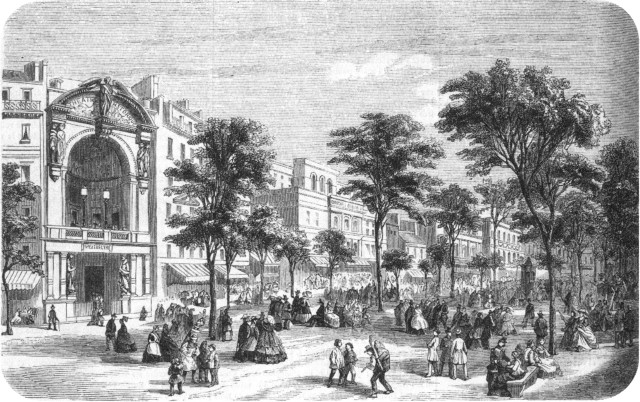
In spite of the difficulties in rehearsal, the first run at the Théâtre Lyrique was successful and the work was soon touring in Germany, Italy, Belgium and England. When it was revived in Paris in 1862 it was a hit and, ironically, Gounod had to write extra music so that a ballet could be added as required by the Paris Opéra. The opera remains one of the most frequently performed operas across the globe.
The Faust story is best known from its retelling by Goethe but it is based on an older tales dating back to the fifteenth century.
The models for Faustus might have included Johann Fust, who was also Johann Gutenburg’s business partner, and Johann Georg Faust, an itinerant German alchemist, astrologer and magician, although there are many earlier legends about making a pact with the devil.
The first play based on the Faust legend was probably Christopher Marlow’s Doctor Faustus which was first performed around 1590.
The first opera based on the legend was Faust by Louis Spohr, written in 1816, and the most recent is probably Doctor Atomic by the American composer John Adams, which presents Robert Oppenheimer as a 20th century ‘Faust’. The Faust legend has been used by writers and dramatists as diverse as, Stephen King, Oscar Wilde, Alexander Pushkin, W.S. Gilbert and Terry Pratchett.
To book tickets please click here.


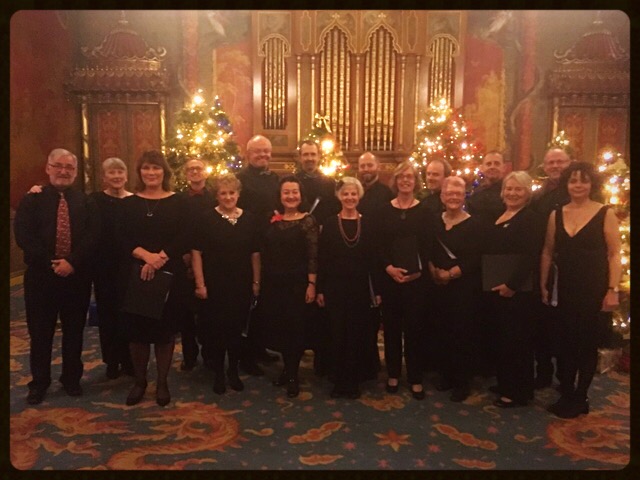



Rehearsal one, under the baton of Musical Director Michael Withers we start note bashing a section. We are rusty, it’s been a few weeks since we did any singing, sounds a bit ropey! Note bashing continues for a number of weeks, all accompanied by our marvelous pianist Tim Nail who has played for Heber Opera rehearsals for many years. We start to think we know some of it.
Rehearsal one, under the baton of Musical Director Michael Withers we start note bashing a section. We are rusty, it’s been a few weeks since we did any singing, sounds a bit ropey! Note bashing continues for a number of weeks, all accompanied by our marvelous pianist Tim Nail who has played for Heber Opera rehearsals for many years. We start to think we know some of it.

Well, all that note bashing then falls apart (for me at least) as soon as we start on production with Director Dorothy Withers. We begin by blocking moves in our rehearsal space, each of us frantically writing down what we are supposed to be doing and when in our scores. Musically, at this stage, everything gets forgotten as we use a different part of our brains to physically orientate ourselves. Tim is a great help as he instinctively knows what sections we are struggling with and plays our lines out.
Well, all that note bashing then falls apart (for me at least) as soon as we start on production with Director Dorothy Withers. We begin by blocking moves in our rehearsal space, each of us frantically writing down what we are supposed to be doing and when in our scores. Musically, at this stage, everything gets forgotten as we use a different part of our brains to physically orientate ourselves. Tim is a great help as he instinctively knows what sections we are struggling with and plays our lines out.

Weeks follow with less music only time and more production. Gradually the music and moves join together in our minds and we are encouraged to put down our scores and work from memory. Some of us, myself included, like to write out the words along with the moves and cues in a notebook. This forces us to remember the tunes as only the words and moves are in the notebook.
Weeks follow with less music only time and more production. Gradually the music and moves join together in our minds and we are encouraged to put down our scores and work from memory. Some of us, myself included, like to write out the words along with the moves and cues in a notebook. This forces us to remember the tunes as only the words and moves are in the notebook.

Then the Sitz Probe: this is essentially the orchestra’s rehearsal. It is the first time we sing with the orchestra and our last chance to go through the whole show with our scores, although we try to use them only as a quick reference point and to note if there are sections that need revision.
Then the Sitz Probe: this is essentially the orchestra’s rehearsal. It is the first time we sing with the orchestra and our last chance to go through the whole show with our scores, although we try to use them only as a quick reference point and to note if there are sections that need revision.

Dress rehearsal – a whole new ball game! Now we have costumes to contend with, we are in a different space, there are new exits and entrances to get used to, the sound is different. Sometimes they say a poor dress rehearsal means a good first performance! Usually that is so because the dress rehearsal highlights bits we need to review, either musically or with movement and we go away and practise at home.
Dress rehearsal – a whole new ball game! Now we have costumes to contend with, we are in a different space, there are new exits and entrances to get used to, the sound is different. Sometimes they say a poor dress rehearsal means a good first performance! Usually that is so because the dress rehearsal highlights bits we need to review, either musically or with movement and we go away and practise at home.

First night nerves kick in, we are all tense and many of us will have had a restless night going over the show in our heads. The tension of performance brings us all together and, at the end of that first show, we are relieved and pleased that it all came together. Always room for improvement in subsequent performances, of course!
First night nerves kick in, we are all tense and many of us will have had a restless night going over the show in our heads. The tension of performance brings us all together and, at the end of that first show, we are relieved and pleased that it all came together. Always room for improvement in subsequent performances, of course!

But then, it all starts again for the next production ………….
But then, it all starts again for the next production ………….